
Rules, Records And Results Across World Sport
Policy For Results is a reference desk for seven sports. We take one law, one scoring system or one record at a time, set it out in full, and point at the clause it comes from. Cricket, football, tennis, kabaddi, basketball, badminton and the rest of the calendar.
The Latest On The Desk
Newest first. Every piece carries a publication date and a checked date, and the two are not always the same.
- Formula 1 Points System Explained: How A Championship Is Scored
 Twenty-five for a win, eight for a Sprint, nothing for the fastest lap any more. The full tables, the shortened race bands, and what a 2026 season is worth in points.
- Pro Kabaddi League Guide: Teams, Format And Every Champion
 Twelve franchises, a raid worth as much as a tackle, and twelve seasons of champions. The league explained, the rules that matter on the mat, and why season 13 slipped to 2027.
- P V Sindhu Career Record: Titles, Olympic Medals And Playing Style
 Two Olympic medals, a world title and 500 career wins. Sindhu’s record laid out in full, including the 2026 season that ended a nineteen month wait for a title.
- Ballon d’Or Winners List: Every Winner From 1956 To 2026
 Harry Kane became the first English winner since 2001. The full list of men’s winners from 1956, the women’s list since 2018, the record holders and the rule changes behind them.
- India At The Olympics: Every Medal, Sport By Sport
 Forty-one medals in 124 years, eight of the ten golds from one hockey team. The complete record by sport and by Games, and the part the totals do not show.
- Basketball Positions Explained: What All Five Players Do
 Point guard to centre, the five numbered roles, what each one is actually asked to do, and why the modern game has quietly stopped obeying them.
- Fastest Ball In Cricket History: The Speed List, Checked
 Shoaib Akhtar’s 161.3 kilometres per hour still stands. Everything below it on the list was measured by different instruments in different decades, and this is what those numbers actually mean.
- Tennis Scoring Explained: Why It Goes 15, 30, 40 And Then Deuce
 Points, games, sets and the tie break set out in order, plus the final set rule all four Grand Slams finally agreed on and the no ad format used across the doubles tour.
- Offside Rule In Football Explained, With The VAR Lines That Judge It
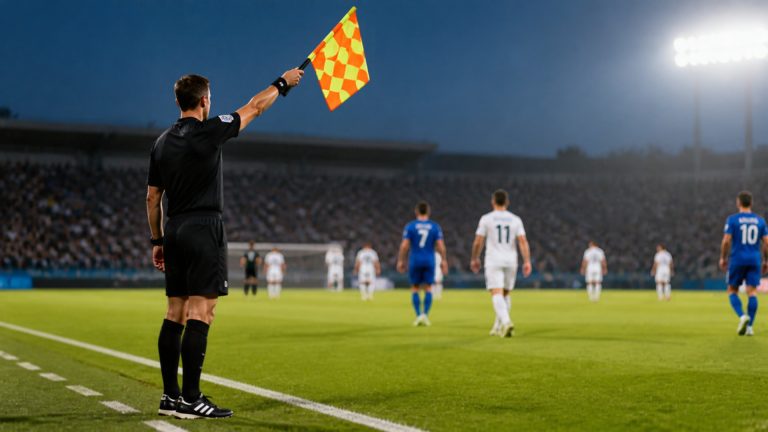 Law 11 is three tests, not one, and most arguments are about the second. The rule as written, the exceptions, how semi automated technology draws the line, and what is only being trialled.
- Duckworth Lewis Stern Method Explained: How Rain Changes A Cricket Target
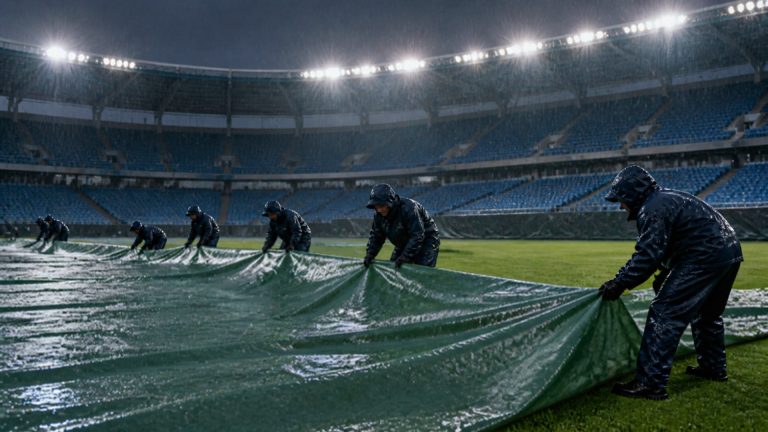 The DLS method turns overs and wickets into resources and rewrites the target from there. The arithmetic, the two editions, the par score and the minimum overs rule, set out plainly.
The Seven Sections
What each section is for, and where it goes first.
Cricket
Cricket is the only major sport whose rulebook is still called a code of laws, and it shows. Almost everything contentious in a match traces back to a clause rather than to a decision: what counts as a fair delivery, when a substitute may bat, how a target is rebuilt after rain. The section exists because those clauses are badly explained everywhere else.
We cover the laws as the International Cricket Council and the Marylebone Cricket Club publish them, and the records as the scorers keep them, which are two different things. Where a figure depends on a cut-off date, the date is stated. Where a law is a playing condition set by one competition rather than a Law of the game, we say which, because the two get muddled constantly and the difference decides arguments.
Football
Football has one rulebook for the entire planet, maintained by the International Football Association Board, and a technology layer sitting on top of it that changes faster than the laws do. The gap between the two is where most of the confusion lives, and it is what this section is for.
We write up the laws that decide results rather than the ones that decide fouls: offside, the handball clause, what video review may and may not look at, and how a competition sets its own conditions inside the laws. We also keep the honours lists, because a winners list is only useful if somebody has checked the years when the rules of the award itself changed. Both kinds of page carry the season they apply to, since a law written for 2026 and 2027 is not the law that applied last year.
Tennis
Tennis is the most formally scored sport in common circulation. Nothing counts in ones, the units nest inside each other four deep, and the final set rule spent decades being different at each of the four Grand Slams before they finally agreed.
This section explains the scoring ladder, the formats, and the tournament structures that sit on top of them: the difference between a Masters event and a Slam, what seeding actually guarantees, and how ranking points decay. Tennis rewards a reader who understands the structure, because almost every tactical conversation in the sport is really a conversation about the scoreboard and what it is worth to be two points from a set.
Kabaddi
Kabaddi is the sport on this site with the shortest distance between a rule and a result. A raid lasts thirty seconds, the raider must keep up a continuous chant, and a single do or die raid can turn a match that was already decided.
The section covers the laws of the mat, the Pro Kabaddi League that made the sport a television property, and the international tournaments that run alongside it. It also covers the business, because kabaddi at the top level is unusually exposed to it: a league can lose a season to a broadcast negotiation in a way that a football league cannot. India is the centre of the sport in every sense, and this is written from here.
Basketball
Basketball is the clearest case on this site of a sport whose written rules barely changed while the way it is played changed completely. Nothing in the laws of the game says what a point guard does or how many players should stand beyond the three point line, and yet both have been rewritten inside twenty years.
The section covers the structures the sport actually uses: positions and what replaced them, the shot clock and what it does to a possession, the differences between the international rulebook and the North American one, and the records that follow from each. The aim is for a reader to be able to watch one possession and say what everybody on the floor is trying to do.
Badminton
Badminton is a rally sport with a scoring system that was redesigned in living memory, and the change from serve only scoring to rally points altered how the sport is played, not just how it is counted. It is also the sport where Indian results have improved most sharply this century.
We cover the laws, the service rules that produce more arguments than anything else in the sport, the tour structure from Super 300 to the World Tour Finals, and the careers that define the modern Indian game. Player pages here are records rather than profiles: medals, titles, head to heads and the shape of a playing style, with the sources for each.
Other Sports
Everything that does not need a section of its own but belongs on a desk like this. Motorsport, athletics, hockey, the Olympic programme and the multi-sport events that organise the calendar around themselves.
Two kinds of page live here. The first is a scoring or classification system, the sort of thing that decides a championship months before anybody notices, which is why the Formula 1 points tables sit in this section. The second is a national or historical record that spans sports rather than belonging to one, which is where the Olympic medal pages live. If a subject grows past a handful of pages it gets promoted to a section of its own.
Three Questions We Get
Why So Much About Rules?
Because rules are the part of sport that nobody explains properly and everybody needs. Match reports are written for people who already watched. Previews are guesses. A clause, on the other hand, is the same on a Tuesday in November as it was in the final, and once you have it you can read every match that follows.
It is also where the errors are. A surprising amount of what circulates about offside, about the Duckworth Lewis Stern method and about shortened motor races is simply wrong, repeated from one site to the next without anybody opening the regulations. Opening the regulations is most of the work here.
How Do You Decide A Record Is Settled?
By asking who ratified it and how it was measured. The fastest delivery in cricket is a settled record because one body recognises one reading. The order below it is not settled, because the readings come from different instruments in different decades, and we say so on the page rather than publishing a tidy list that pretends otherwise.
Where two credible sources disagree, both get stated. A table that quietly picks one is worse than no table, because the reader has no way of knowing a choice was made on their behalf.
Why Is There A Date On Everything?
Because sport changes its own rules more often than it admits. Football rewrote four laws for the 2026 and 2027 season. Motorsport removed a points rule in 2025 that had existed since 2019. A page without a date is a page asking you to trust that nothing has moved since it was written.
Every article here carries a published date and a checked date. When a governing body changes something, the page changes and the checked date moves with it.
A Short Glossary
Nine terms that come up across the site, each meaning something precise rather than something general.
- Playing condition. A rule set by a competition rather than by the sport. The laws of cricket do not mention an impact player; a league playing condition does. Almost every argument that starts with the words that is not in the rules is really an argument about this distinction.
- Resource. In cricket, the combination of balls remaining and wickets in hand that a batting side still owns. The Duckworth Lewis Stern method converts it into a percentage and rebuilds a target from it, which is why two sides on the same score can be in very different positions.
- Par score. The score a chasing side needs to be level if a match is abandoned at that instant. It moves on every ball and jumps when a wicket falls. It is not a target.
- Offside position. A position, not an offence. A player can stand in one all afternoon without being penalised. The offence only exists when that player becomes involved in active play.
- Semi automated offside technology. Limb tracking that generates the offside line from data rather than from an operator drawing one by hand. The word semi means a human still signs the decision off.
- Do or die raid. In kabaddi, the third consecutive raid by a side that has not scored. The raider must score or be out, which forces a team protecting a lead to take a risk it does not want.
- Super tackle. A tackle made when three or fewer defenders remain on the mat. It is worth two points rather than one, and it is the rule that keeps a side that is nearly all out in the match.
- Deciding point. Tennis scoring without advantage. At deuce one point settles the game and the receiver picks the side. It is standard in tour doubles, and it exists for scheduling rather than for sport.
- Countback. The tie break used by championship tables. Level on points, the title goes to the competitor with more wins, then more second places, and onwards. It has never been needed to decide a Formula 1 drivers title, which is exactly why the rule is written down.
Where The Rules Come From
Each sport on this site has a body that writes its rules, and knowing which one answers most questions before they are asked.
In cricket the Laws are owned by the Marylebone Cricket Club and have been since 1788. The International Cricket Council does not write the Laws; it writes the playing conditions that sit on top of them for international cricket, and every league writes its own on top of those. Three layers, and a dispute can belong to any of them.
Football is simpler and stranger. One body, the International Football Association Board, writes one set of Laws for the whole world, and it meets once a year to change them. Competitions may choose whether to use video review and how many substitutes to allow, but they cannot rewrite a Law.
Tennis rules are maintained by the International Tennis Federation while the professional tours run their own conditions, which is why a format can differ between a Slam and a tour event. Badminton answers to the Badminton World Federation, basketball to the International Basketball Federation with a separate North American rulebook alongside it, kabaddi to the International Kabaddi Federation with league conditions above it, and motorsport to the Federation Internationale de l Automobile, whose sporting regulations change most years.
When a page here states a rule, it is stating that body’s published position at the checked date. Where a competition has varied it, the page says so.
How To Use This Site
Four things worth knowing before you start reading.
The seven links across the top are the whole site. There is no tag cloud to get lost in and no archive by month, because nothing here is organised by when it happened.
Tables are the point of several pages. On a phone they scroll sideways rather than shrinking, because a half readable table is worse than a wide one.
Where a page relies on a governing body document, it names the body rather than linking to a copy of it. Those documents move, and a dead link is a worse citation than a name you can search.
If something here is wrong, write to the desk. Corrections are the only mail answered the same day, and the checked date on the page moves when one lands.
The address is [email protected], and the editorial policy sets out how pages are researched, corrected and dated. Nothing on this site is betting advice, and there is no advertising, no newsletter and no login anywhere on it.
Six Clauses That Decide More Matches Than People Think
Most results turn on something ordinary. Occasionally they turn on a clause that almost nobody reads until it costs somebody a trophy. These six come up again and again in the pages on this site.
The Par Score, Not The Target
In a rain hit chase the number that matters is not the revised target on the scoreboard. It is the par score, the figure the batting side needs to be level at that exact ball. A side can be ahead of par and still lose the match if the rain stops one ball early. Read the full page.
Offside Is Judged At One Instant
The position is frozen at the moment the ball is played by the teammate, not when it arrives. Everything after that instant is irrelevant to the decision, which is why a striker can run past the last defender and still be onside. Read the full page.
Six All Means Different Things
A tie break at six games all is standard in almost every set. The final set is the exception, and it took the four Grand Slams until recently to agree on one answer. A match point in the fifth set does not mean the same thing it meant ten years ago. Read the full page.
Do Or Die Changes The Maths
Two empty raids and the third one must produce a point or the raider is out. Teams plan two raids ahead because of it, and the bonus line becomes a safety net rather than a reward. Read the full page.
The Fourteen Second Reset
After an offensive rebound the shot clock goes to fourteen, not twenty four. It is the single rule that most changed how teams build a roster, because second chance possessions now reward shooters over post players. Read the full page.
Countback Settles A Tie
When two drivers finish a season level on points the title goes to whoever has more wins, then more second places, and so on down the order. The points table can be level and the championship still decided months earlier. Read the full page.